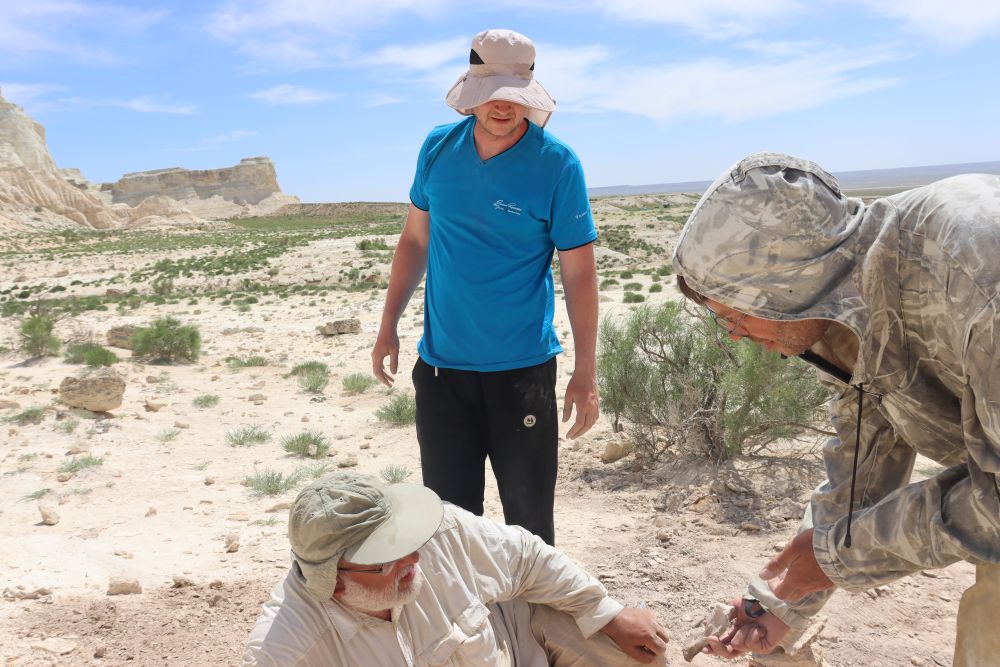
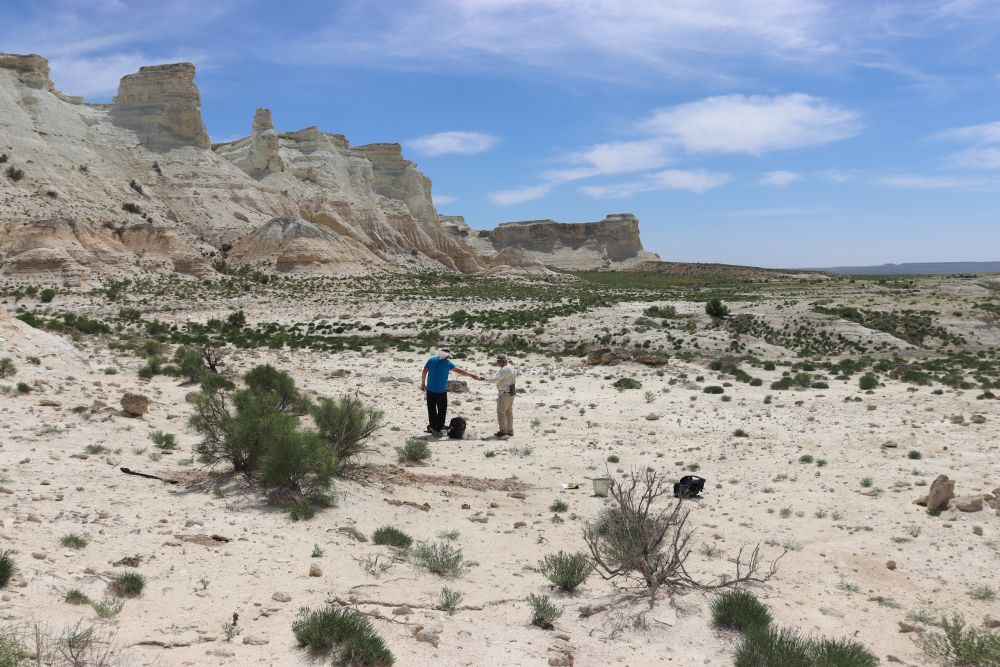
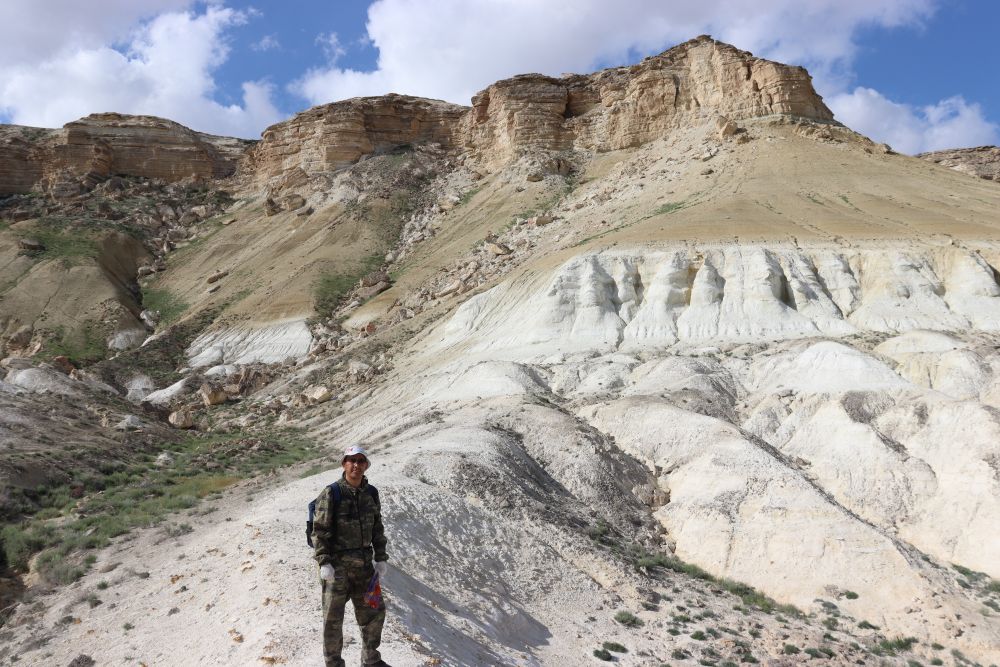
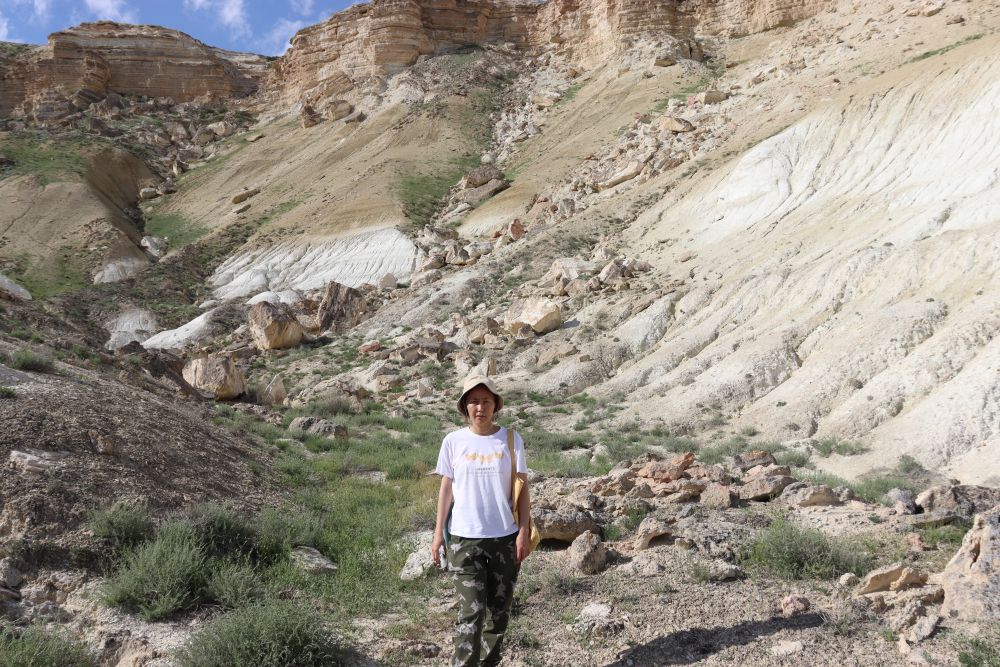
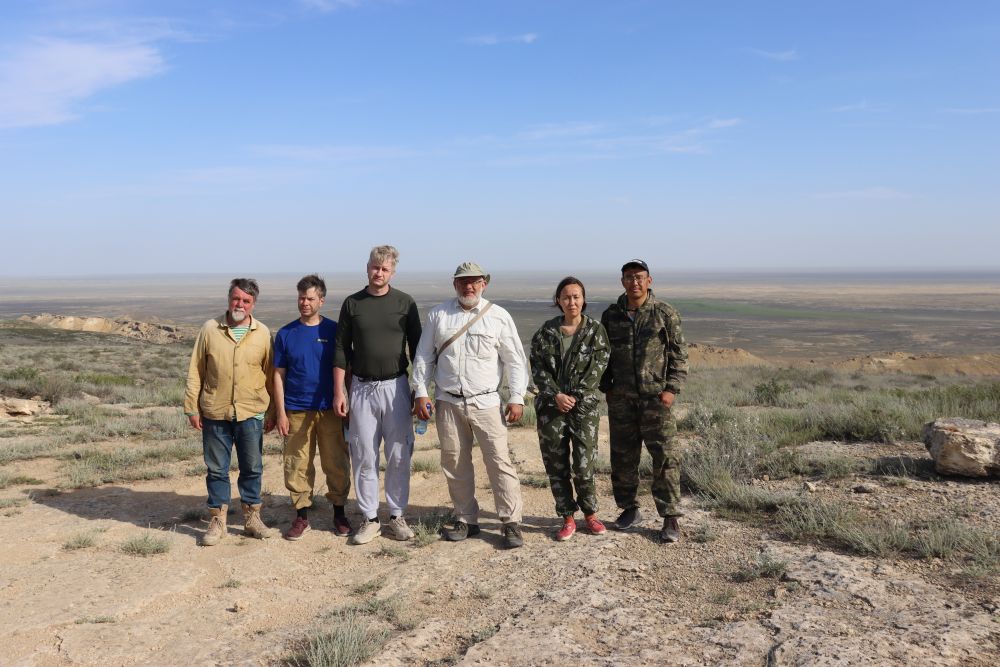
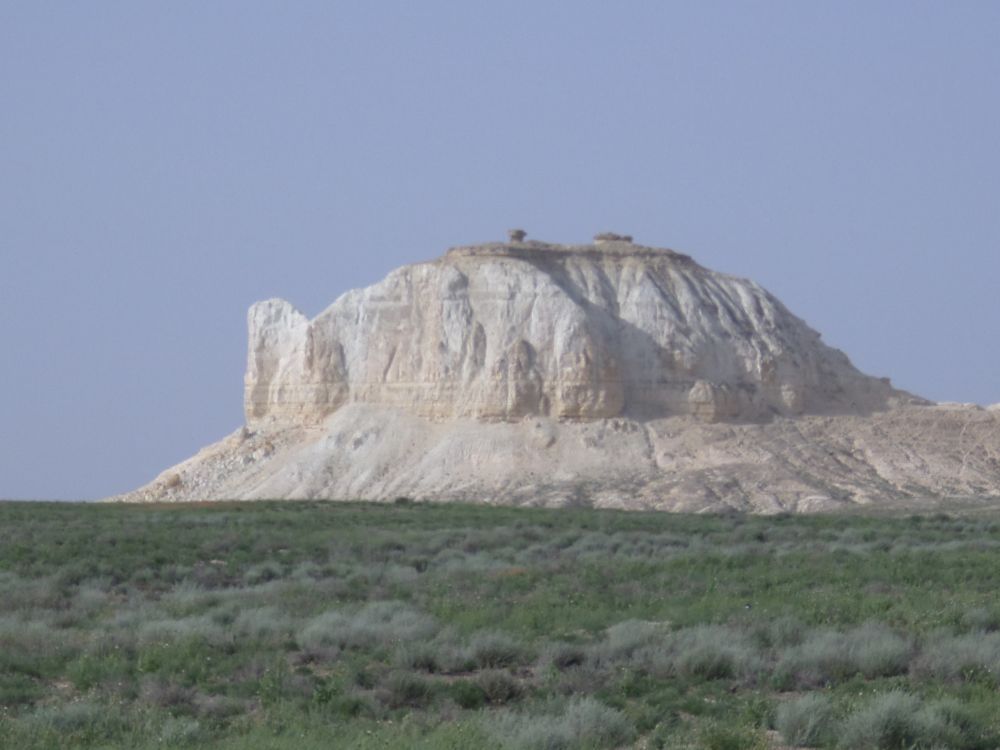
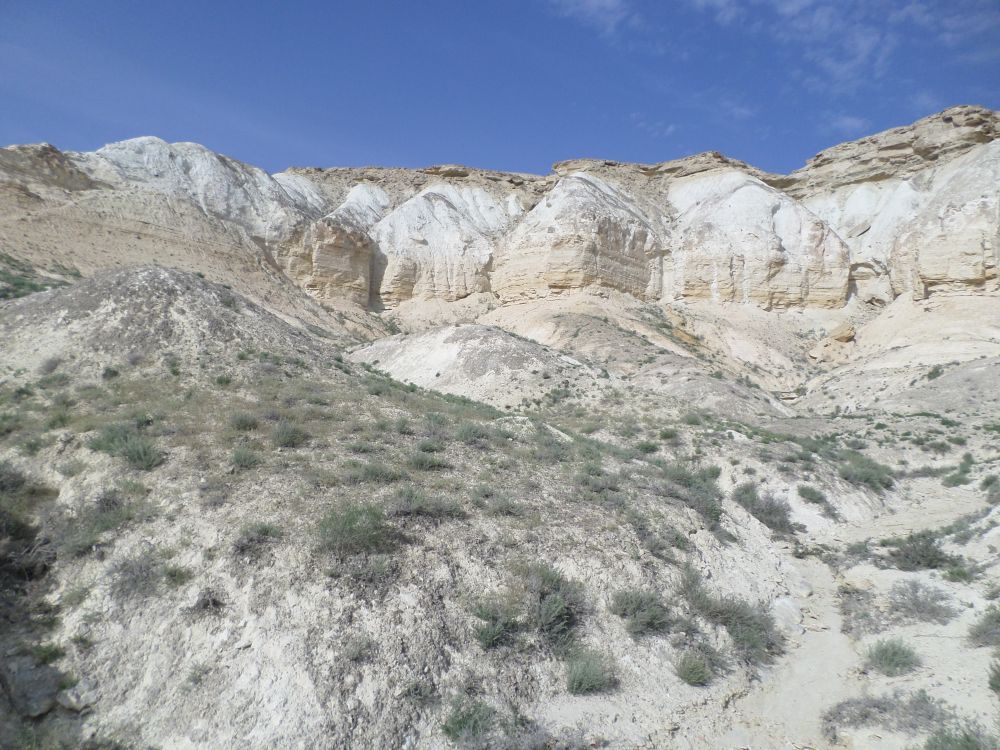
Within the framework of Program BR28712767, “Study of the Ecological, Socio-Demographic, Economic-Geographical, and Paleobiogeographical Aspects of the Ural Region and Assessment of Its Natural Resource Potential” (targeted program funding provided by the Ministry of Science and Higher Education of the Republic of Kazakhstan), an international paleontological expedition was conducted from 14 May to 14 June 2026 with the aim of investigating the fossil fauna of the Atyrau and Mangystau regions. The expedition was carried out by researchers of M. Utemisov West Kazakhstan University, including M.T. Berliguzhin, D.B. Yakupova, and driver-expedition specialist A.T. Khaydarov, in collaboration with researchers from the Zoological Institute of the Russian Academy of Sciences (St. Petersburg): I.G. Danilov (Candidate of Biological Sciences), Ye.A. Zvonok (Candidate of Geological Sciences), A.V. Panteleyev (Research Fellow), and A.S. Rezviy (Head of the Scientific, Exhibition, and Museum Department).
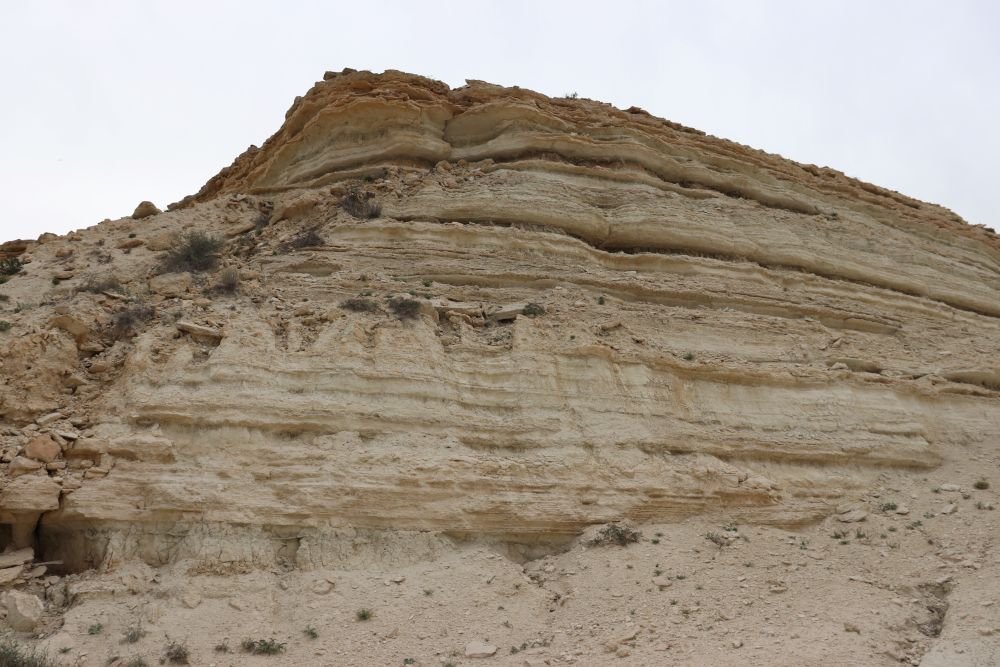
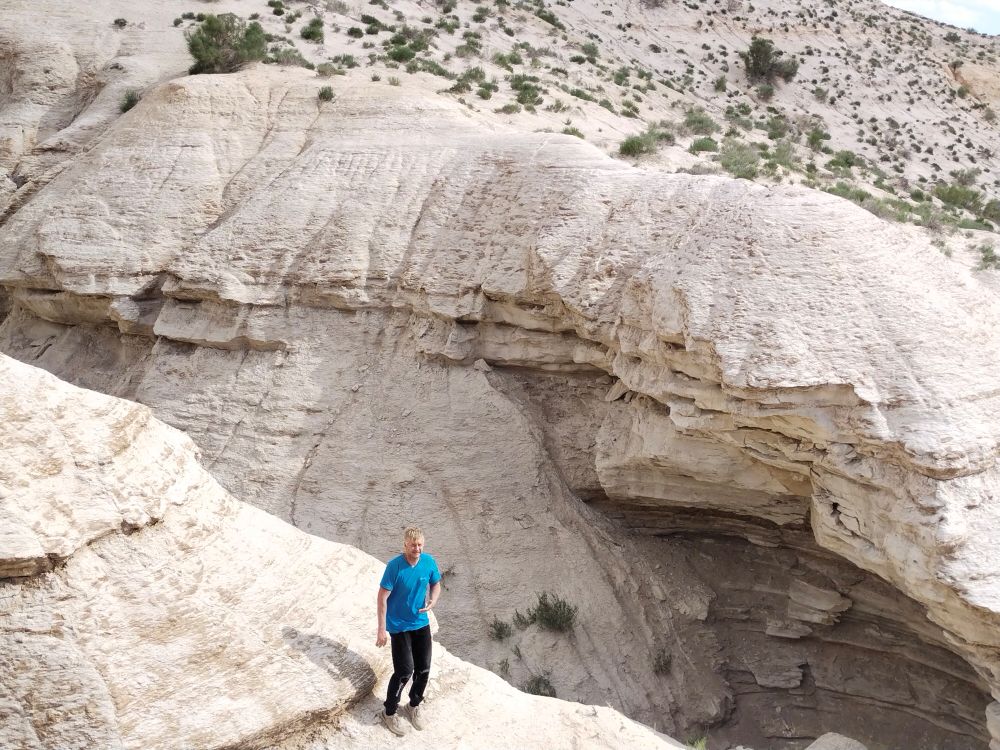
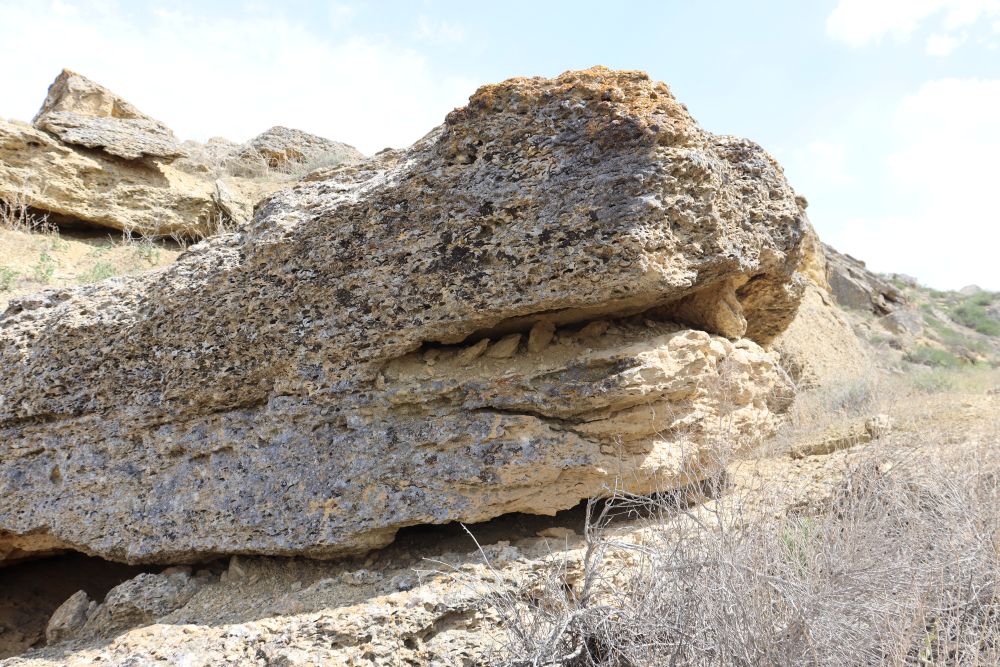
During the expedition, several fossil localities were investigated, including Sholqara, Zheltau, Donyztau, Sandy, Kert, Besbulaq, Chaynik Tau, and Manata. Fossil remains were recovered from Jurassic, Cretaceous, and Paleogene deposits, including the Adai and Shorym formations. Stratigraphic descriptions of the studied sections were carried out, and the geographic coordinates of the fossil localities were recorded. In addition, measurements of magnetic susceptibility were performed using a PIMV kappameter, and the corresponding observation points were georeferenced. The PIMV kappameter supports miniSD cards with a capacity of up to 32 GB and is equipped with a GLONASS/GPS module that records the geographic coordinates of each measurement point and enables voice comments to be attached to individual measurements. As part of the expedition, visits were also made to regional and district historical and local history museums located in Inderbor settlement, Atyrau, and Aktau, where additional materials relevant to the paleontological and geological heritage of the region were examined.
During the visits, the expedition members became acquainted with museum exhibitions and archival collections and provided recommendations regarding their scientific interpretation and characterization. In addition, the researchers donated their scientific publications, including a monograph, as well as fossil specimens collected during the expedition, to the collections of the Mangystau Regional Museum of History and Local Lore. Such collaborative interactions contribute to the advancement of museum-based research and facilitate a comprehensive investigation of the paleontological heritage of Western Kazakhstan. During the fieldwork, the researchers conducted systematic searches for fossil remains of both invertebrate and vertebrate animals, collected valuable scientific material, and outlined subsequent stages for its detailed study and analysis. The results of the research will be published following the laboratory processing, identification, and comprehensive examination of the collected material.
During the expedition, participants mastered and applied a range of paleontological field techniques, including prospecting and reconnaissance survey methods, excavation procedures, documentation and recording of fossil localities, sediment screening and washing through sieves for the recovery of small fossil remains such as teeth and scales, fossil preparation through the mechanical removal of surrounding rock matrix, and primary conservation procedures involving the stabilization and strengthening of fragile bones using specialized adhesives and consolidating solutions.